

You have probably noticed that online stores seem to read your mind lately. You browse a cozy throw blanket for your sister's birthday, and within minutes the whole page reshapes itself around her lifestyle. That is not coincidence, and it is definitely not magic. What is AI-powered personalized shopping? It is a technology-driven experience that uses machine learning, behavioral data, and real-time signals to serve you products that feel handpicked, not randomly generated. And when it comes to finding the perfect gift for any occasion, this kind of intelligence changes everything.
Table of Contents
- Key takeaways
- How AI personalized shopping technology actually works
- The real benefits of AI for gift shopping
- Trust, transparency, and the privacy conversation
- What the next generation of AI shopping looks like
- How to get the most from AI gift tools right now
- My honest take on AI-powered gift shopping
- Find the perfect gift with Govava's AI gift wizard
- FAQ
Key takeaways
| Point | Details |
|---|---|
| AI personalization goes beyond basic filtering | It adapts in real time to individual behavior, not just demographic segments. |
| Gift discovery gets smarter with AI | AI matches gifts to recipient personality, lifestyle, and occasion with far greater precision than browsing alone. |
| Consumer trust is still a work in progress | Only 14% of shoppers fully trust AI recommendations, making transparency a critical factor for brands. |
| Agentic AI is the next frontier | Semi-autonomous AI assistants can act on your behalf, raising both exciting possibilities and valid concerns. |
| You stay in control with the right tools | The best AI shopping platforms let you set preferences, review logic, and adjust recommendations on your terms. |
How AI personalized shopping technology actually works
Think of traditional online shopping like a store that organizes products by department and calls it personalization. AI-powered personalized shopping is nothing like that. It is more like having a sharp personal shopper who has read every review you have ever written, watched every product you have lingered on, and quietly cataloged every gift you have ever bought for someone you love.
The engine behind this experience relies on machine learning models that continuously analyze your purchase history, browsing patterns, time-on-page data, and contextual signals like season, device, and location. These models do not wait for you to finish a shopping session before updating. They adapt in real time, so the fourth product you see in a session is already smarter than the first. This real-time inference runs on hybrid infrastructure that balances speed-critical recommendations with deeper batch processing for less urgent tasks like weekly digest emails.

Here is where it gets genuinely interesting. Traditional rule-based segmentation puts you into a bucket: female, 32, fitness enthusiast. AI personalization treats you as an individual with a dynamic profile that shifts based on what you just did five minutes ago. If you searched for "graduation gifts for a tech lover" and then spent three minutes on a specific wireless keyboard, the AI does not just note the category. It weighs the context of the occasion, the recipient type, and your engagement depth to sharpen its next suggestion.
The applications span far beyond product recommendations. AI shopping technology influences search result ranking, email content sequencing, dynamic landing pages, and even the order in which product images appear. It is quietly running the whole show, and most shoppers never notice it at all.
Pro Tip: When you engage with AI-powered shopping tools, interact deliberately. Click on what genuinely interests you and skip past what does not. The more intentional your behavior, the faster the AI learns your actual preferences rather than making assumptions.
The real benefits of AI for gift shopping
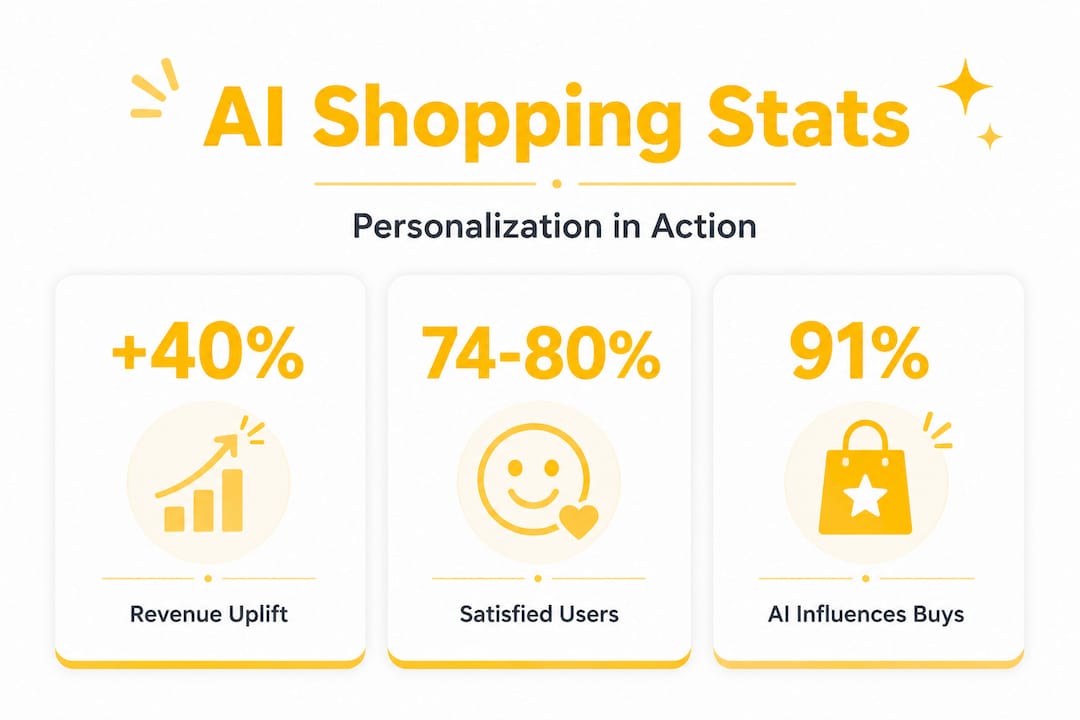
Here is a number worth sitting with. Companies using AI personalization generate 40% more revenue, and between 74% and 80% of consumers say they are more likely to purchase from brands that offer personalized experiences. That is not just a business stat. It reflects something deeply human: people respond when they feel understood.
Nowhere is this truer than in gift shopping. The average person stares at a search bar for several minutes trying to figure out what to get a coworker they know only professionally, or a grandmother who says she does not need anything. AI-driven consumer experience changes this dynamic entirely. Instead of you doing all the cognitive work, the system does it with you.
A well-built AI gift assistant takes inputs like the recipient's personality traits, hobbies, your relationship to them, the occasion type, and your budget, then cross-references those signals against thousands of curated products to surface options that actually make sense. Shopping for a fitness-obsessed friend's birthday looks completely different from shopping for a newlywed couple's housewarming. AI knows this and treats them as entirely different problems to solve.
What truly separates AI personalization in gifting from generic browsing is how it handles choice overload. Most people, when presented with too many options, shut down. The paradox of choice is real. AI curates aggressively, surfacing four or five options that feel considered rather than a catalog of five hundred. Shopper confidence goes up. Second-guessing goes down. And nearly 8 in 10 shoppers now value AI recommendations as much as or more than brand guidance, which says a lot about how much trust has grown in a short time.
Trust, transparency, and the privacy conversation
Here is the honest part of this story, because it deserves honesty. AI-powered personalization is powerful and also a little unsettling if you are not sure what is happening behind the scenes. A striking 91% of shoppers say AI influenced their purchase, yet only 14% say they trust AI recommendations fully. That gap tells you something important: AI is already shaping decisions, but it has not yet fully earned the confidence of the people it is influencing.
The biggest friction points tend to cluster around a few areas:
Payment data and autonomous spending make many shoppers uncomfortable. In one study, 51% of US shoppers distrust AI storing their card details, and the median cap people set on autonomous AI spending is just $50. People are curious about AI assistance, but they want to keep their hand on the wheel.
Opaque pricing is another flashpoint. When AI adjusts prices dynamically without explanation, shoppers notice and they do not like it. Research shows 66% to 70% of consumers would disengage or complain if they discovered a retailer using hidden AI-driven pricing against them. The resentment is not toward the technology itself but toward the feeling of being manipulated without consent.
"Transparency is a competitive advantage: brands openly communicating AI usage foster higher trust and loyalty among consumers." — Zamplia Research
Brands that explain their recommendations, tell you why a product was suggested, and give you control over your data profile are 61% more likely to earn repeat business from trust-conscious shoppers. Social proof helps too. When AI-powered recommendations come paired with real customer reviews and genuine ratings, the experience shifts from feeling algorithmic to feeling credible.
What the next generation of AI shopping looks like
The AI shopping tools you use today are impressive. What is coming next is on a different level entirely. We are entering the era of agentic AI, where AI combines memory, reasoning, and tools to act semi-autonomously on your behalf, not just recommend but actually move through a shopping journey with you or sometimes for you.
Here is what that evolution looks like in practice:
- Conversational gift wizards walk you through a multi-step dialog to understand the recipient before ever showing you a product. Instead of search bars, you get a conversation that feels more like talking to a thoughtful friend.
- Autonomous replenishment agents quietly reorder household staples when stock runs low, using your history to predict exactly when you will need them.
- Occasion-aware assistants remember that your mom's birthday is in three weeks and proactively surface gift ideas based on what she mentioned liking the last time you shopped for her.
- Personalized search ranking restructures product pages entirely based on your stated priorities, like sustainability, price sensitivity, or brand loyalty.
Agentic AI in retail is already showing results. Basket size increases of 12% to 18% have been observed among shoppers who actively engage with these assistants. But there are genuine trade-offs worth naming. When AI handles too much of the decision-making, there is a real risk of losing the anticipation and deliberation that makes gift-giving feel emotionally meaningful. Automation can make shopping faster without making it better.
Pro Tip: Use agentic AI tools for efficiency on routine purchases, but stay hands-on for emotionally significant gifts. The best outcomes come when AI narrows the field and you make the final call.
How to get the most from AI gift tools right now
You do not need to be a tech expert to use AI-powered gift shopping well. You just need to engage with it intentionally.
When you open an AI gift assistant, give it real information. Vague inputs produce vague results. Instead of typing "gift for friend," try "outdoor adventure enthusiast, early 30s, just completed their first marathon, budget around $75." The more context you give, the more the AI has to work with, and the sharper the suggestions become. Platforms built on AI that learns family interests get genuinely better over time when you engage honestly.
Ask questions about data and transparency before you commit to a platform. A trustworthy AI shopping tool should be able to tell you what data it collects, how long it stores it, and why it is recommending a specific product. If that information is buried or absent, that is a signal worth taking seriously.
Set boundaries around autonomous spending. Most reputable platforms let you define a cap on what the AI can spend without your explicit confirmation. Use that feature. It keeps the experience helpful rather than surprising.
Look for platforms that pair AI recommendations with real customer reviews and clear explanation of why each product was selected. That combination of algorithmic precision and social proof is what makes a recommendation feel trustworthy rather than just convenient. And if a platform lets you thumbs-down a suggestion and immediately learn from it, that responsiveness is a great sign that the system genuinely adapts to you.
My honest take on AI-powered gift shopping
I have been watching AI reshape shopping habits for a while now, and I will be straightforward with you: my own gift-giving changed the moment I started using AI tools properly. Not because they replaced my judgment, but because they gave me a starting point that was actually relevant instead of leaving me staring at the same ten "top gifts for him" lists I had already seen.
What I have learned, though, is that the emotional weight of a gift matters more than the efficiency of finding it. There is something that gets lost when you let automation run the whole process. The deliberation, the small moments of recognition where you think "yes, that is exactly her," those are part of what makes a gift feel like an act of care rather than a transaction. AI at its best narrows the options so your instincts can take over at the finish line.
I am also more careful now about which platforms I trust. I look for ones that are upfront about how they use my data and that give me genuine control over my preferences. Opacity makes me skeptical, and it should make you skeptical too. The brands that win long-term will be the ones that earn trust through honesty, not just through clever algorithms.
My encouragement is this: embrace these tools as collaborators, not substitutes. Let AI do the heavy lifting on research and curation. Then bring your own warmth and knowledge of the person you are shopping for to make the final call.
— carl
Find the perfect gift with Govava's AI gift wizard
Govava was built for exactly this kind of shopping challenge. Whether you are hunting for a last-minute birthday surprise or planning a meaningful anniversary gesture, Govava's AI gift wizard asks the right questions about personality, lifestyle, occasion, and budget, then curates options that feel genuinely thoughtful rather than algorithmically generic.
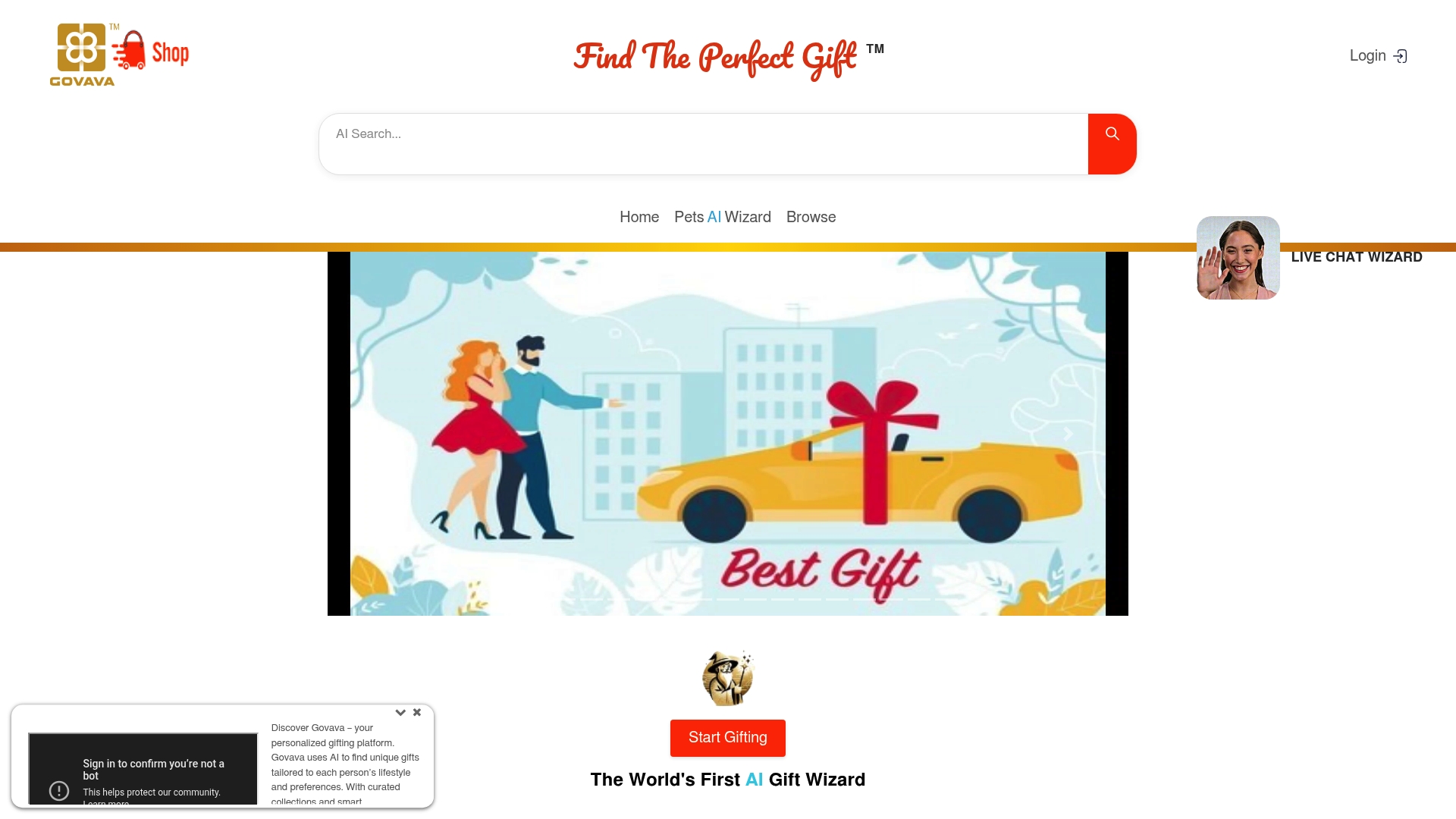
What makes Govava different is the combination of emotional intelligence and transparency. You can see why each gift was recommended, adjust your preferences at any point, and explore curated gift ideas without ever feeling like the system is making decisions for you. It is AI-powered personalized shopping at its best: fast, relevant, and still deeply human. Try Govava's AI gift wizard for your next occasion and discover how good gift discovery can actually feel. You can also explore curated gift options across a wide range of personalities and occasions, or use the AI-powered gift search to get started in seconds.
FAQ
What is AI-powered personalized shopping?
AI-powered personalized shopping uses machine learning to analyze your behavior, preferences, and context in real time, then delivers product recommendations tailored specifically to you rather than to a broad demographic group.
How does AI personalize gift recommendations?
AI takes inputs like the recipient's personality, hobbies, relationship to the shopper, occasion type, and budget, then matches those signals against curated product data to surface gifts that are genuinely relevant rather than randomly suggested.
Is it safe to use AI for shopping and gift purchasing?
Most AI shopping tools are safe, but it pays to check how each platform handles your payment data and browsing history. Look for transparency about data use, and set a spending cap on any autonomous features for added peace of mind.
Why do so few shoppers fully trust AI recommendations?
Despite AI influencing 91% of purchase decisions, only 14% of consumers trust AI recommendations fully, largely because many platforms do not explain why products are suggested or how personal data is being used.
What is agentic AI in shopping?
Agentic AI refers to assistants that can act semi-autonomously during a shopping journey, handling multi-step tasks like researching, comparing, and even purchasing on your behalf, within limits you set in advance.