

Nearly half of all shoppers now use AI tools like ChatGPT, Claude, and Gemini for gift ideas and recommendations, yet most parents still find themselves staring blankly at their teenager's bedroom door wondering what on earth to buy. Teenagers are a fascinating, fast-moving, endlessly evolving audience, and the old strategy of picking something "fun" from the store is a recipe for polite disappointment. Understanding how AI helps parents gift teenagers is genuinely changing that story, turning what used to be hours of stressful scrolling into a surprisingly delightful, personalized experience. Think of it as having a wise, tireless shopping companion who actually knows what Gen Z is into.
Table of Contents
- Understanding how AI bridges the teen-parent gifting gap
- The personalized power of AI gift finders for teens
- Top strategies to use AI effectively for teen gift shopping
- Navigating teen AI use: thoughtful parenting with AI-assisted gifting
- Why AI-enhanced gifting is the future every parent should embrace
- Try Govava: the world's first AI gift wizard for personalized teen gifts
- Frequently asked questions
Key Takeaways
| Point | Details |
|---|---|
| AI adoption is growing | Nearly half of shoppers regularly use AI tools for personalized gift recommendations. |
| Bridges parent-teen gap | AI helps parents quickly understand teen interests and styles for meaningful gifts. |
| Saves time | Effective AI gift workflows reduce search times from hours to minutes. |
| Supports agentic parenting | Using AI thoughtfully promotes teens’ independent thinking about gift choices. |
| Use verified insights | Combine AI with safety checks and price comparisons for smart purchases. |
Understanding how AI bridges the teen-parent gifting gap
Picture this: your teenager communicates mostly in TikTok references, speaks a dialect of slang you need a translator for, and changes their interests roughly every six weeks. That is not an exaggeration. That is Tuesday. The disconnect between what parents think teens want and what teens actually want is real, and it costs both money and emotional energy every birthday and holiday season.
Here is what makes AI such a game-changer in this space. AI gift finders are built to analyze hobbies, personal style, age, interests, and even mood to generate gift ideas that feel genuinely curated rather than guessed at. You don't need to know the difference between "aesthetic" and "dark academia" to use one. You just describe your teen in plain English, and the AI does the heavy lifting. Platforms can understand teen preferences in under 30 seconds, which is extraordinary when you compare it to a two-hour spiral through a mall with no clear direction.

What's equally interesting is that 51% of parents report their teenager already uses AI chatbots regularly. That means teens are already fluent in this technology. Parents who tap into AI for gift research are simply borrowing a tool their kids already trust, which creates an unexpected bridge between generations. You're not trying to outsmart your teen; you're meeting them in their world.
Pro Tip: Before prompting any AI tool, jot down three things your teen mentioned recently, a show, a hobby, a phrase, and use those exact words in your prompt. The more specific your input, the sharper your results.
The beauty of how AI makes gift-giving personal lies in this specificity. Rather than browsing generic "best gifts for teenagers" listicles that recycle the same ten ideas year after year, AI tools ask the right questions and return suggestions that reflect your teenager, not some hypothetical average one.
The personalized power of AI gift finders for teens
Let's talk about what's actually happening under the hood when AI generates gift ideas. These tools process natural language, meaning you can type "my 15-year-old is obsessed with vintage fashion, Korean skincare, and iced coffee" and receive suggestions that feel tailor-made rather than algorithmically bland. That shift from generic to meaningful is exactly what separates a gift that gets used from one that collects dust.
Major retailers have started recognizing this reality. Kohl's AI Gift Finder, built with Google Cloud's Gemini, is a strong example of this in action. It cuts gift search time from hours to minutes by analyzing a recipient's interests and style with birthday or occasion context built right in. That kind of efficiency is not just convenient; it changes how parents relate to the entire gifting experience.
Here is a simple comparison of how traditional shopping stacks up against AI-assisted gifting for teens:
| Factor | Traditional shopping | AI-assisted gifting |
|---|---|---|
| Time to shortlist | 1 to 3 hours | Under 10 minutes |
| Personalization | Based on parent's guess | Based on teen's actual interests |
| Variety of ideas | Limited to familiar stores | Broad, including niche options |
| Occasion relevance | Inconsistent | Built into the AI prompt |
| Budget filtering | Manual | Easily included in the prompt |
Once you see that side by side, it's hard to go back to the old way. The process of narrowing down to a final gift becomes far less stressful when you compare AI gift shortlists and evaluate options with real context rather than gut instinct alone.
Here is a quick workflow that shows just how smoothly this can go:
- Describe your teen's personality and top three hobbies in one sentence.
- Add the occasion, birthday, graduation, holiday, and your budget range.
- Ask the AI to generate five to seven gift ideas with brief explanations for each.
- Review the list and pick two or three that resonate most with you.
- Cross-reference those picks against current availability and reviews before buying.
Pro Tip: Ask the AI to explain why each suggestion fits your teen. Those reasons often spark additional ideas, and they give you something genuinely thoughtful to say in the card.
This is smart gifting with AI at its best. Not cold and mechanical, but warm, curious, and genuinely helpful.
Top strategies to use AI effectively for teen gift shopping
Knowing AI can help is one thing. Knowing how to use it well is another. A 5-step AI shopping workflow can reduce gift search time from roughly two hours down to ten minutes, and the key is in how you structure each step.
Start by building a clear profile. Define your teenager's age, their current obsessions, their style aesthetic, and any brands or activities they've talked about lately. The more texture you give the AI, the more relevant its suggestions will be. "Teenage girl" is a thin prompt. "16-year-old who loves anime, thrift shopping, and journaling, budget $50 to $75" is a recipe for genuinely good ideas.
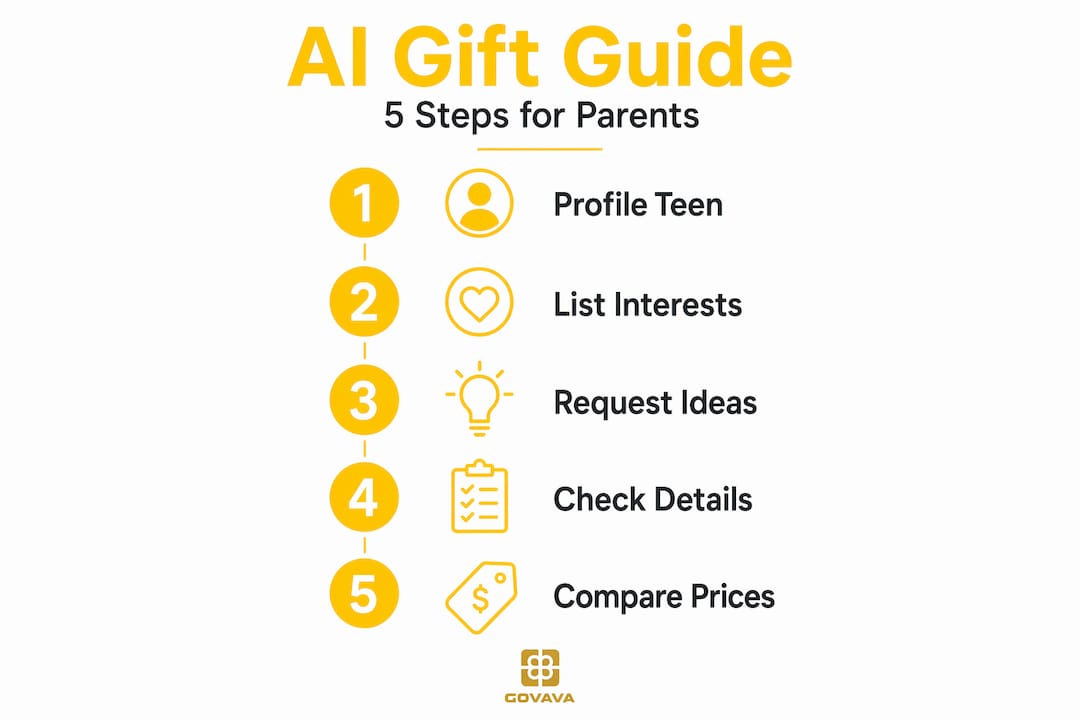
From there, generate a shortlist of three to five options and resist the urge to stop at the first suggestion you like. AI gift ideas for teens work best when you let the tool show you a range, because sometimes the third or fourth suggestion is the one that makes you say, "Oh, she would love that." Variety matters.
Once you have your shortlist, verify before you buy. Safety checks, age-appropriateness, and current customer reviews are all things AI cannot always confirm in real time. As a practical rule, pair AI shortlists with price trackers and merchant ratings to avoid buyer's regret. AI suggests; you decide with all the facts in hand.
Then compare prices across platforms. A gift idea is only as good as the deal you find, and AI-generated suggestions often span multiple price points and retailers. Finally, finalize your top pick with both personalization and budget in mind. The goal is a gift that feels chosen, not just purchased.
Pro Tip: Use your holiday gift planning checklist to track AI suggestions across multiple family members so nothing falls through the cracks during busy seasons.
These gifting tips for teenagers work because they treat the process like a project with clear phases, not a last-minute panic. AI is your trusty sidekick in that project, not the decision-maker.
Navigating teen AI use: thoughtful parenting with AI-assisted gifting
Here is a perspective that doesn't get mentioned enough: the way you use AI to find your teenager a gift can actually model thoughtful decision-making for them. Teens are watching how adults interact with technology, and your approach matters more than you might think.
"Parents should use AI agentically, meaning they guide their teens toward using AI as a thinking tool rather than a shortcut that replaces judgment." — Dr. Andrew Hammond
Agentic parenting, the kind where you stay engaged and curious rather than passive, means using AI gift suggestions as conversation starters. Instead of simply ordering what the algorithm recommends, ask your teen, "I heard you're really into this lately. What is it about it that you enjoy?" That one question turns a transaction into a moment of genuine connection, and it deepens their thinking about their own preferences.
AI can actually build a teenager's self-efficacy when handled well. If you involve your teen in reviewing AI-generated options, you're helping them practice evaluating choices, articulating preferences, and understanding why some things appeal to them more than others. That's a life skill dressed up in a birthday shopping conversation.
Parents remain the emotional anchor in all of this. No AI tool carries the warmth of a parent who genuinely listened and then acted on what they heard. The AI gift wisdom for parents framing is powerful precisely because it positions AI as the research engine and the parent as the heart of the gift. One does the analysis; the other provides the love.
Why AI-enhanced gifting is the future every parent should embrace
Let's be honest about something. The discomfort many parents feel around AI gifting tools is often rooted in a fear of seeming lazy or impersonal. But that framing gets it exactly backwards. Using AI to research your teenager's current interests more accurately is more attentive, not less. It means you're refusing to guess and choosing instead to know.
There's a deeper truth here that most gifting articles skip right past. The parents who struggle most with teen gifting are often the ones who are genuinely the most caring. They want to get it right. They feel the weight of choosing something meaningful. AI doesn't diminish that intention; it amplifies it by giving those parents better raw material to work with.
Think about what AI actually offers in this context. It surfaces teen trends that parents might miss simply because they're not living inside the same cultural world as their kids. It saves the kind of time that, for a working parent, is genuinely precious. And it opens up creative gift categories that would never appear in a standard search, personalized experiences, niche hobby kits, micro-trend fashion finds, and tech gifts for teens that feel current and exciting rather than generic.
The boost gifting satisfaction argument is compelling because it's backed by real emotional outcomes. Gifts that land well strengthen family bonds in small but meaningful ways. A teenager who feels seen and understood by a parent's gift is more likely to be open and communicative. That's not a small thing.
The future of gifting isn't impersonal algorithms replacing human thoughtfulness. It's AI and emotional intelligence working together, with parents firmly in the driver's seat, steering toward gifts that genuinely matter.
Try Govava: the world's first AI gift wizard for personalized teen gifts
Ready to put everything you've just learned into action? Govava's AI gift wizard was built exactly for moments like this, when you want to give your teenager something that truly fits their personality but you don't want to spend your weekend lost in browser tabs.
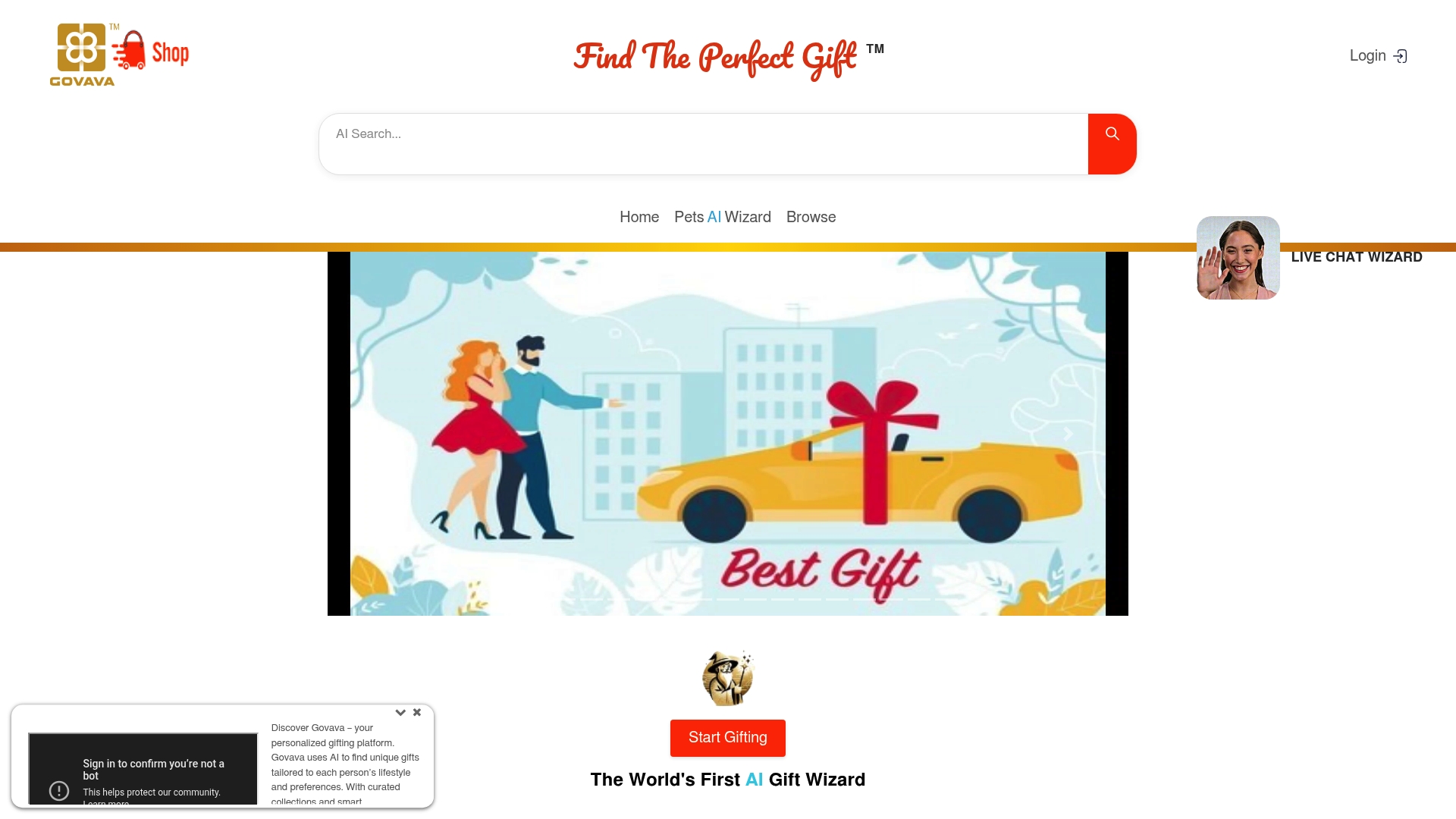
Govava analyzes your teen's unique profile, from their hobbies and style to the occasion and your budget, and returns a curated set of gift ideas in minutes. You can browse Govava's AI-curated teen gifts to explore options spanning tech, fashion, wellness, and creative interests, all filtered through the kind of algorithmic precision that makes recommendations feel personal rather than random. You can even manage your teen's gift preferences year-round so every birthday and holiday feels just as thoughtful as the last. Govava isn't just a gift finder. It's the gifting partner every parent deserves.
Frequently asked questions
How accurate are AI gift recommendations for teenagers?
AI gift recommendations are often far more relevant than generic options because they analyze natural language descriptions of a teen's personality, interests, and style to generate personalized matches. The more detail you provide in your prompt, the more accurate and useful the suggestions will be.
Can AI replace a parent's judgment in choosing gifts?
No. AI is a powerful idea-generation tool, but parents should guide teens toward independent thinking rather than letting AI replace the judgment and emotional insight only a parent can bring. Think of AI as the research assistant and yourself as the decision-maker.
How can parents ensure the gifts suggested by AI are safe and appropriate?
Always verify safety and reviews and compare prices across platforms after generating your AI shortlist. AI suggests based on interests and context, but confirming age-appropriateness and product quality is always a parent's responsibility.
How early should parents start using AI tools for holiday gift planning?
Starting at least one month before the holiday gives you time to research, compare, and personalize without the pressure of a ticking clock. Research shows that 61% of shoppers buy gifts one to two months before major holidays, and using AI early in that window means you get the best selection, not just what's left.