

AI gift matching is defined as the process of extracting personality traits, relationship context, and behavioral signals from natural language or social media data to generate curated, personalized gift recommendations. Think of it as having a thoughtful friend who has memorized everything about the person you're shopping for, except this friend runs on algorithmic precision and never forgets a detail. Platforms like Govava have built their entire identity around this idea, and tools like Jenova's AI Shopping Advisor and Alhena AI Gift Assistant have proven that conversational AI outperforms static quizzes and category filters when it comes to delivering genuinely relevant gift ideas. Understanding how AI matches gifts to personality means understanding a layered process that starts with data, moves through machine learning, and lands on something that actually feels human.
How AI matches gifts to personality: the data it needs
The whole process begins with what you tell it, and what it can observe. AI gift matchers convert a brief recipient description into a structured profile covering relationship, interests, and personality cues without requiring you to browse product categories at all. Picture typing "My mom, she's really into gardening and drinks way too much coffee" and watching the system build a nuanced profile from that single sentence. That is not magic. That is natural language processing doing exactly what it was designed to do.
Beyond conversational input, more advanced systems pull from public social media profiles. Apify's AI Gift Recommendation Engine extracts data from LinkedIn, Instagram, Facebook, and Twitter/X to generate five tailored recommendations that account for interests, occasion, and budget. This multi-platform approach captures both stable identity signals, like long-term hobbies and lifestyle preferences, and recent contextual signals, like a new fitness routine or a recent move. High-quality personality-to-gift matches combine both signal types to reduce generic outputs, which is why a system that only knows someone likes "the outdoors" will suggest a water bottle while a system that knows they just started trail running will suggest trail-specific gear.
The technical backbone of this data processing includes several key methods:
- Natural language processing (NLP): Parses conversational descriptions to extract relationship type, personality cues, humor, and budget signals.
- Image recognition: Analyzes photos on social profiles to infer aesthetic preferences, lifestyle activities, and product affinities.
- Sentiment analysis: Reads the emotional tone of posts and comments to understand what genuinely excites a person versus what they engage with passively.
- Profile tokenization: Mapping unstructured social posts into structured interest profiles involves tokenizing texts and classifying them before generating gift matches, a critical step for recommendation accuracy.
Pro Tip: When using any AI gift tool, include at least one personality quirk or inside detail about the recipient. "She stress-bakes sourdough every Sunday" gives the AI far more to work with than "she likes cooking."
How AI algorithms turn personality data into gift suggestions
Once the AI has a personality profile, the real gift-matching wizardry begins. Classification and clustering models group the recipient's traits into interest categories, such as wellness, culinary arts, outdoor adventure, or creative hobbies. From there, recommender systems take over, and they generally work in two ways.

Content-based filtering matches gift attributes (material, category, price point, use case) to the recipient's known preferences. Collaborative filtering goes a step further by identifying patterns across thousands of users with similar profiles and surfacing gifts that people like this recipient have loved. The combination of both methods is what separates a genuinely surprising recommendation from a predictable one.
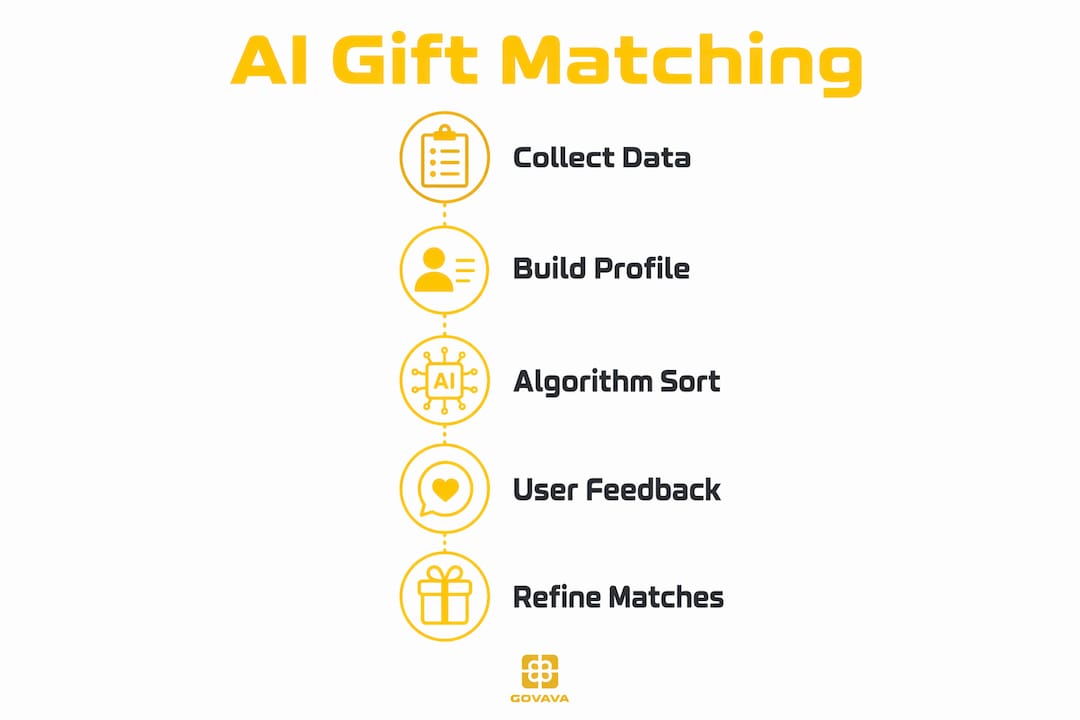
Here is how the recommendation pipeline typically unfolds:
- Profile construction: The system structures raw input into tagged interest categories and personality dimensions.
- Candidate generation: A broad pool of gift options is pulled from the product catalog based on profile matches.
- Scoring and ranking: Each candidate is scored for budget fit and personalization level. Freudly's quiz shows users both budget alignment and personalization scores, so you can see exactly how targeted a recommendation is.
- Feedback integration: User reactions, past purchases, and gift history are fed back into the model to sharpen future suggestions.
- Output delivery: A curated shortlist is presented, often with brief explanations of why each gift fits the recipient.
Reinforcement learning plays a growing role in step four. Advanced AI gift systems use user feedback and gift history to refine recommendations and avoid duplicate suggestions over time. This means the system gets smarter with every interaction, building a richer recipient profile that prevents you from accidentally gifting the same scented candle set two years in a row.
| Recommendation method | Best for | Limitation |
|---|---|---|
| Content-based filtering | Matching known preferences precisely | Can feel predictable if profile is shallow |
| Collaborative filtering | Discovering unexpected but loved gifts | Requires large user data pools to work well |
| Reinforcement learning | Improving accuracy over repeated use | Needs time and feedback to reach full potential |
How AI creates gifts that feel emotionally meaningful
Relevance is the floor, not the ceiling. A gift can be perfectly matched to someone's interests and still feel cold if it lacks emotional weight. This is where the best AI gifting systems go beyond pure algorithmic precision and invite human intention back into the process.
Lovetales AI promotes integrating personal narratives to create emotionally resonant gifts that go beyond what an algorithm alone can generate. When you add a shared memory, an inside joke, or a relationship-specific story to your input, the AI uses that context to surface gifts that carry actual meaning. A personalized book capturing "why I love you" moments, for example, transforms from a generic keepsake into something that makes someone cry in the best possible way.
A few practices that help AI recommendations land with genuine emotional impact:
- Add relationship-specific context: Mention shared experiences, not just hobbies. "We always cook together on Sunday nights" is more powerful than "she likes food."
- Include humor and quirks: Personality quirks are gold for AI systems. They help the model avoid safe, forgettable suggestions and lean into what makes the recipient genuinely them.
- Use gift history memory: Persistent memory across sessions in tools like Jenova's AI Shopping Advisor prevents duplicate categories and builds a richer profile over time, so each gift feels more considered than the last.
- Layer AI output with your own touch: Human intention combined with AI prediction is what makes a gift feel genuinely thoughtful. Use the AI's suggestion as the foundation, then add a handwritten note or a personal customization that only you could provide.
Pro Tip: After receiving AI gift suggestions, ask yourself: "Would this gift make sense to a stranger, or only to someone who knows this person?" If the answer is the latter, you have found a winner.
Learning how AI personalizes gifting for family connections adds another layer here, because family roles carry emotional weight that generic interest profiles often miss entirely.
What are the privacy and ethical considerations of AI gift matching?
Personalization and privacy exist in constant tension, and AI gift matching is no exception. The more data a system uses, the more accurate its suggestions become, but also the more it risks feeling intrusive. Ethical personalization's main challenge is not accuracy but avoiding perceived intrusiveness by being transparent about data collection and processing.
The "creepy" feeling in personalization typically surfaces when users do not understand how a system knows what it knows. A recommendation that feels eerily specific without explanation triggers discomfort rather than delight. Transparency is the antidote. Ethical AI gifting requires clear disclosure of what data is collected, how it is used, and how long it is retained, all aligned with GDPR and CCPA standards.
"The goal of ethical AI personalization is to make people feel understood, not watched. Transparency about data usage is what separates a trusted recommendation from an unsettling one."
Responsible AI gift platforms build trust through several design principles. They collect only the data necessary for the task, give users clear controls over their information, and avoid inferring sensitive attributes like health status or financial stress from behavioral signals. They also make it easy to delete your data or opt out of social media profile analysis entirely. When you are evaluating any AI gifting tool, look for explicit privacy disclosures and check whether the platform complies with major data protection regulations. A platform that cannot answer those questions clearly is one worth skipping.
Key takeaways
AI gift matching works best when personality data, machine learning models, and human emotional context are combined rather than used in isolation.
| Point | Details |
|---|---|
| Data quality drives accuracy | Detailed inputs including quirks, humor, and shared memories produce far more relevant suggestions than generic descriptions. |
| Multi-method algorithms outperform single filters | Combining content-based and collaborative filtering with reinforcement learning delivers the most personalized results. |
| Emotional resonance requires human input | AI surfaces the right gift category, but personal narratives and relationship context make it genuinely meaningful. |
| Gift history memory prevents repetition | Systems with persistent memory across sessions build richer profiles and avoid duplicate suggestions over time. |
| Transparency builds trust | Ethical AI gifting platforms disclose data usage clearly and comply with GDPR and CCPA to keep personalization from feeling intrusive. |
Why I think AI gifting is only as good as what you put into it
I have spent a lot of time watching people interact with AI gift tools, and the pattern is consistent. The people who get the most out of them are not the ones with the most tech-savvy. They are the ones who take thirty extra seconds to describe the recipient like a real person rather than a demographic. "My dad, 58, likes golf" produces fine results. "My dad, 58, who has been obsessed with links-style golf courses since his trip to Scotland and always buys the cheapest tees because he loses them constantly" produces something genuinely surprising and right.
The honest truth is that AI gift matching is not a replacement for knowing someone. It is a multiplier for that knowledge. The technology is genuinely impressive, and the machine learning models behind platforms like Govava are getting better at reading between the lines of what you share. But the emotional intelligence in a great gift still originates with you. The AI amplifies it with speed and scale.
What excites me most about where this is heading is the integration of multi-modal inputs, voice, images, and behavioral patterns, alongside deeper emotional context modeling. We are moving toward systems that can recognize not just what someone likes but what would genuinely surprise and delight them. That is a different and more interesting problem than relevance alone. For now, the best advice I can give is to treat the AI as a sharp collaborator, not an oracle. Feed it well, and it will give you something worth giving.
— carl
Find your perfect gift with Govava's AI Gift Wizard
Govava is the world's first AI Gift Wizard, built specifically to match gifts to personality, occasion, and relationship with the kind of precision that makes recipients feel genuinely seen. You simply describe who you are shopping for, including their interests, quirks, and your shared history, and Govava's engine generates a curated shortlist of personality-matched gifts that fit your budget and the occasion.
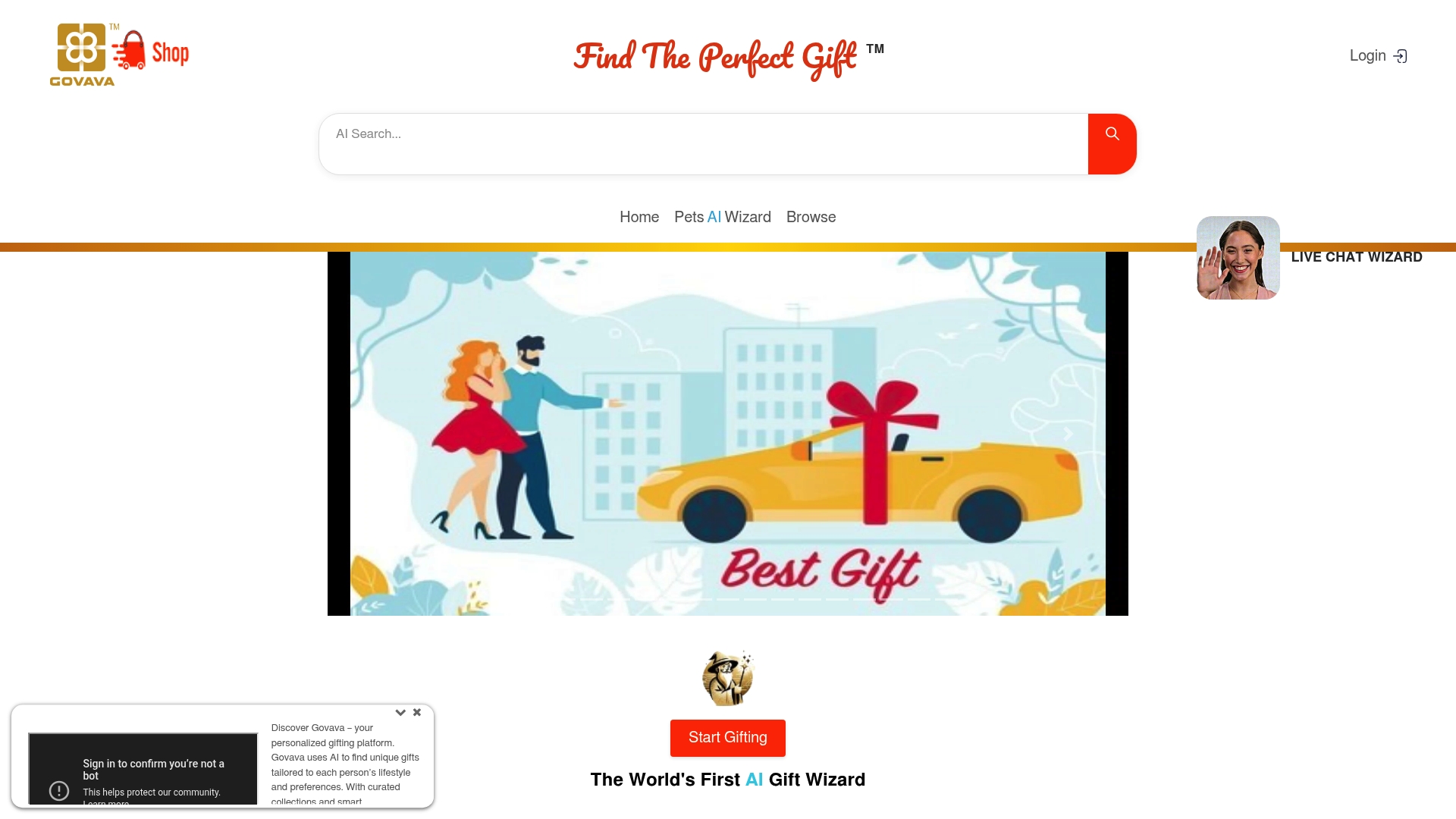
Govava remembers past gifts, tunes recommendations to your price range, and gets smarter with every search. Whether you are shopping for a birthday, anniversary, or a "just because" moment, Govava turns what used to be a stressful scroll into a genuinely enjoyable experience. Try Govava for your next gift and see what it feels like when the right idea finds you first.
FAQ
How does AI match gifts to someone's personality?
AI gift matching analyzes natural language descriptions, social media profiles, and behavioral signals using NLP, sentiment analysis, and machine learning models to build a personality profile and map it to relevant gift categories. The more detail you provide about the recipient, the more accurate and personalized the suggestions become.
Can AI suggest gifts based on hobbies and interests?
Yes. AI gift recommendation engines extract hobby and interest signals from both conversational inputs and public social profiles, then use content-based filtering to match those signals to specific gift attributes like category, use case, and style.
How does AI avoid recommending the same gift twice?
Advanced AI gift systems use persistent gift history memory across sessions and reinforcement learning to track what has already been suggested or purchased, actively filtering out duplicate categories and items in future recommendations.
Is it safe to use social media data for AI gift matching?
Ethical AI gifting platforms collect only publicly available data and disclose exactly how it is used, in compliance with GDPR and CCPA. Always review a platform's privacy policy before connecting social accounts, and choose tools that offer clear data deletion options.
What makes an AI gift recommendation feel truly thoughtful?
The most meaningful AI gift recommendations combine algorithmic precision with human-added context. Adding relationship-specific details like shared memories, inside jokes, or emotional significance gives the AI the raw material to surface gifts that feel personal rather than generic.